Acts 19:1–20
When Paul arrived in Ephesus, he found believers, mighty works, and fierce spiritual conflict. This passage shows us the work of the Holy Spirit, the steady advance of the gospel through bold preaching, and the holy fear that fell on a city when the name of Jesus was honored above every counterfeit.
Believers Who Knew Only Part of the Story (vv. 1–7)
In Ephesus, Paul met some disciples and discovered that they were unaware of the Holy Spirit. They had received only John's baptism of repentance. Paul explained the fuller gospel, laid his hands on them, and prayed; the Holy Spirit came upon them, and they spoke in tongues.
This is the same pattern Peter had proclaimed at Pentecost: "Repent, and be baptized every one of you in the name of Jesus Christ for the remission of sins, and ye shall receive the gift of the Holy Ghost" (Acts 2:38). Repentance, faith in Christ, and the gift of the Spirit belong together.
At the same time, we must remember that the Spirit distributes His gifts as He chooses. Paul asks in
1 Corinthians 12:29–30, "Are all apostles? are all prophets?... do all speak with tongues? do all interpret?"
The clear answer is no. God gives the gifts of the Holy Spirit according to His own will and purpose, not as a uniform measure given identically to every believer.
Two Years of Bold Preaching (vv. 8–10)
Paul preached continually in the synagogue, but when he met rejection from the Jews, he moved to a Gentile setting and taught there for about two years. He proclaimed the death and resurrection of Jesus Christ and the salvation that comes through faith in the Lord. His sincere, persistent labor meant that the message spread until all of Asia had heard the word of the Lord.
Extraordinary Miracles (vv. 11–12)
God performed great miracles through Paul, and many who were sick were healed. These were not displays for Paul's own fame, but signs that confirmed the gospel he preached and pointed people to the living Christ.
The Name That Cannot Be Borrowed (vv. 13–17)
Some traveling Jewish exorcists, the seven sons of a man named Sceva, tried to use the name of Jesus to cast out demons, as though it were a magic formula. But the evil spirit answered them,
"Jesus I know, and Paul I know; but who are ye?" (v. 15).
The possessed man then overpowered them, beat them, and stripped them, so that they fled the house naked and wounded.
The lesson is sobering: the name of Jesus carries no power for those who do not truly belong to Him. When this became known, a holy fear came upon everyone in the city, and the name of the Lord Jesus was greatly honored.
The Spirit fills, the gospel advances, and God confirms His Word, yet His power is never a tool to be borrowed by the uncommitted. As in Ephesus, the right response to all of this is reverent fear and wholehearted devotion, so that the name of the Lord Jesus is magnified among us.
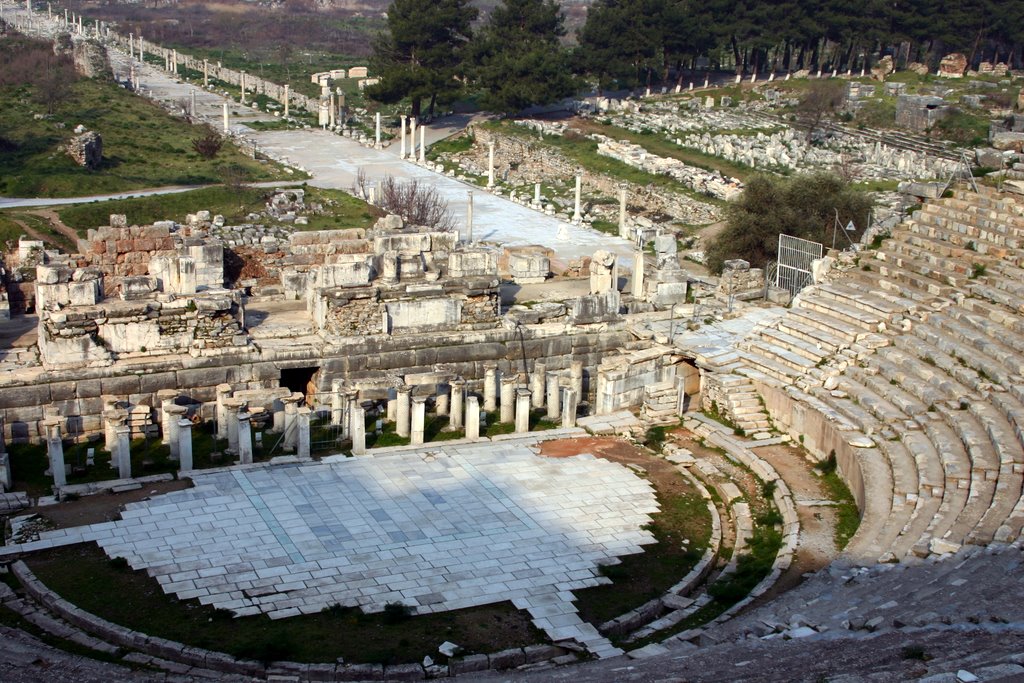
By Robert Helvie, CC BY-SA 3.0, https://commons.wikimedia.org/w/index.php?curid=52833455